Color Explorations Notes
JULY 13 - AUGUST 17; Every Monday
COURSE NOTES
Jump to:
CLASS 1: Where did color come from?
Color as material from the earth.
CLASS 2: Can color imitate nature?
The Renaissance search for realism
CLASS 3: Can darkness be beautiful?
Baroque color and the drama of light
CLASS 4:What if color is light itself?
Romanticism, Japanese prints, Impressionism
CLASS 5: What if color expresses emotion instead of reality?
Van Gogh, Gauguin, Munch, Fauves
CLASS 6: CLASS 6: What if color becomes the subject?
Abstraction to pop art/ pop culture
Class 1: Where did Color come from?
From the Stone Age to Ancient Egypt, Greece and Rome: Early pigments and color symbolism
PART 1: Color comes from the Earth
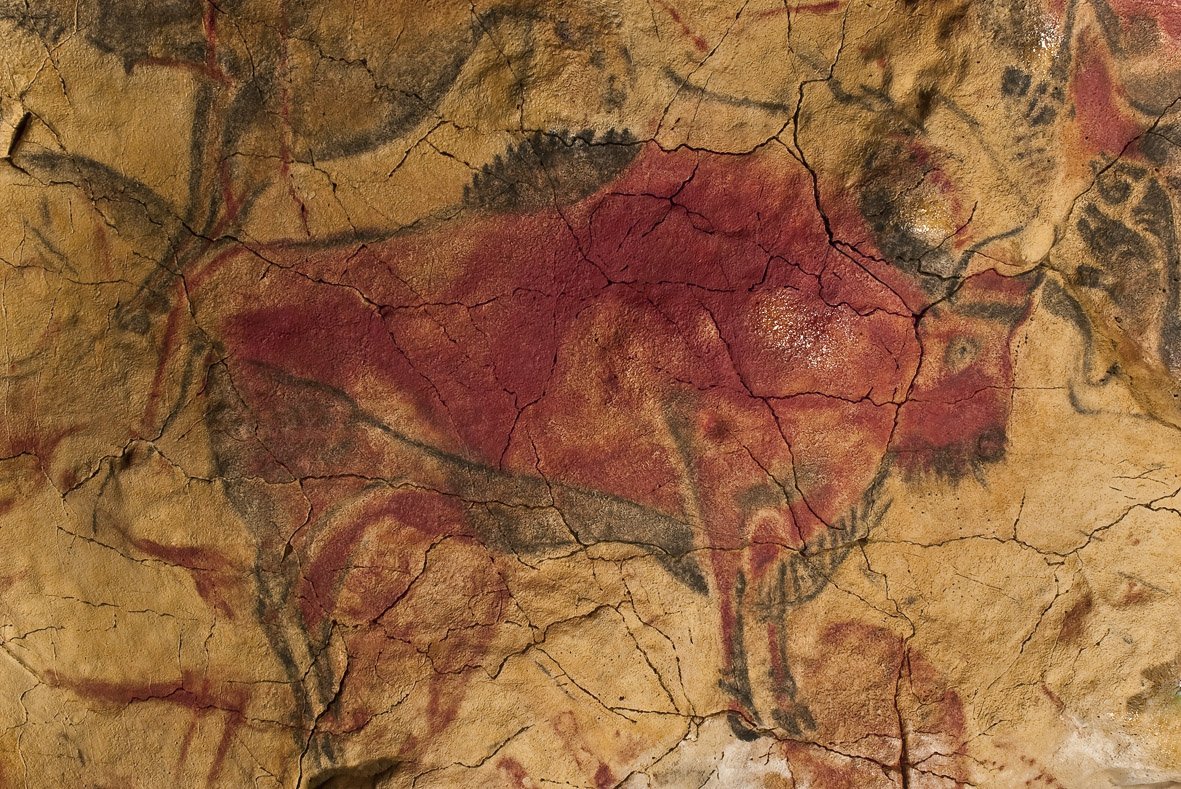
Bison, Cave of Altamira, circa 35,000 BCE
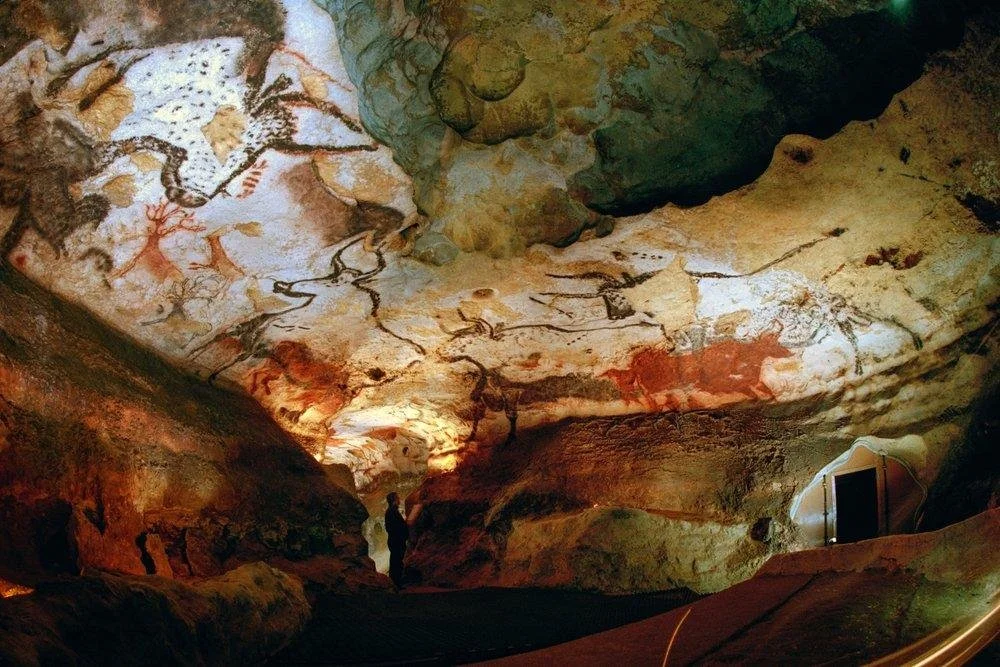
The Hall of the Bulls, Lascaux Caves, circa 20,000 BCE
Part 2: What is a pigment?
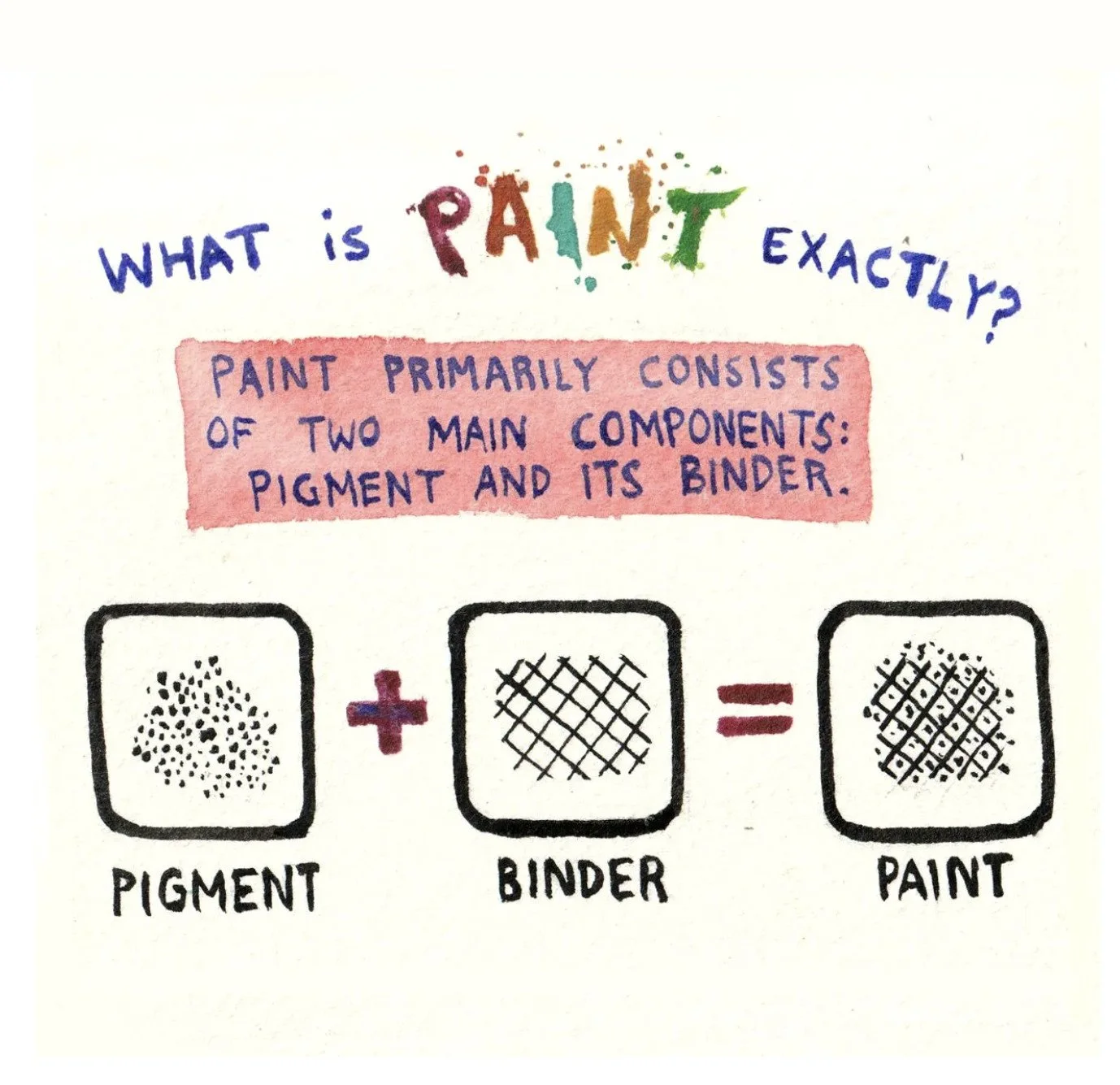
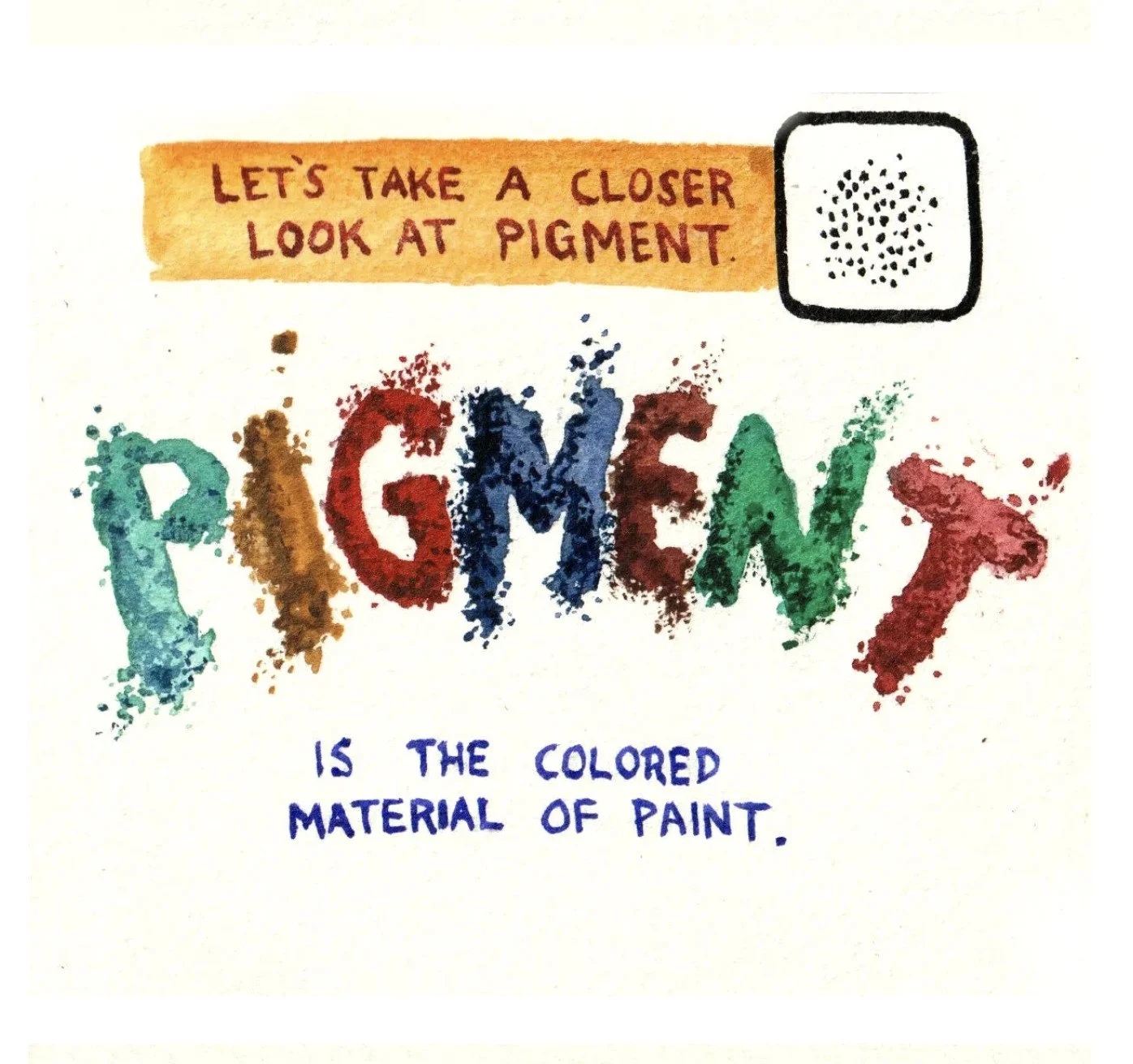
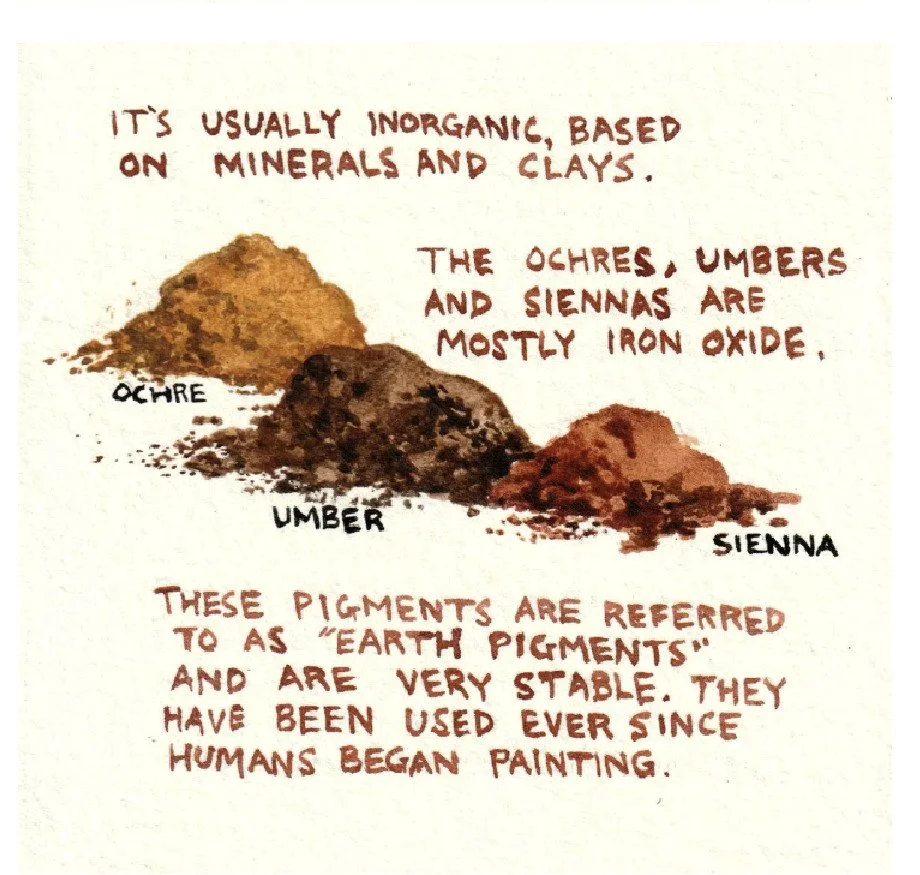
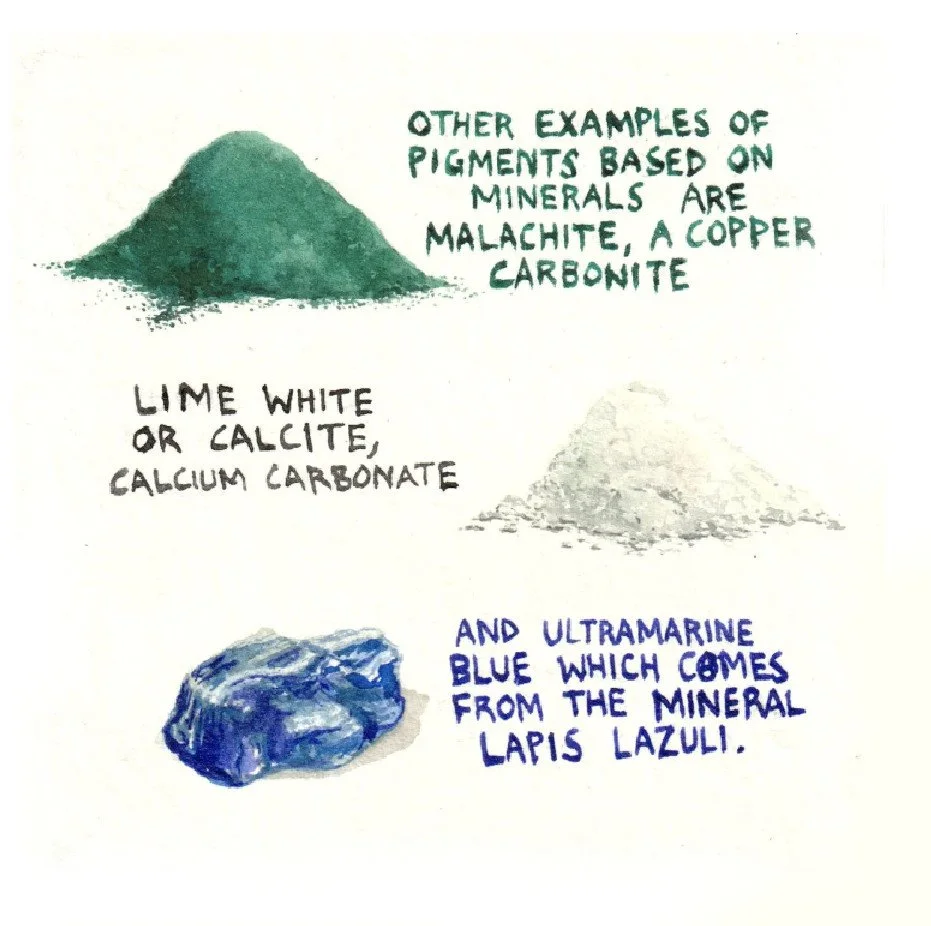
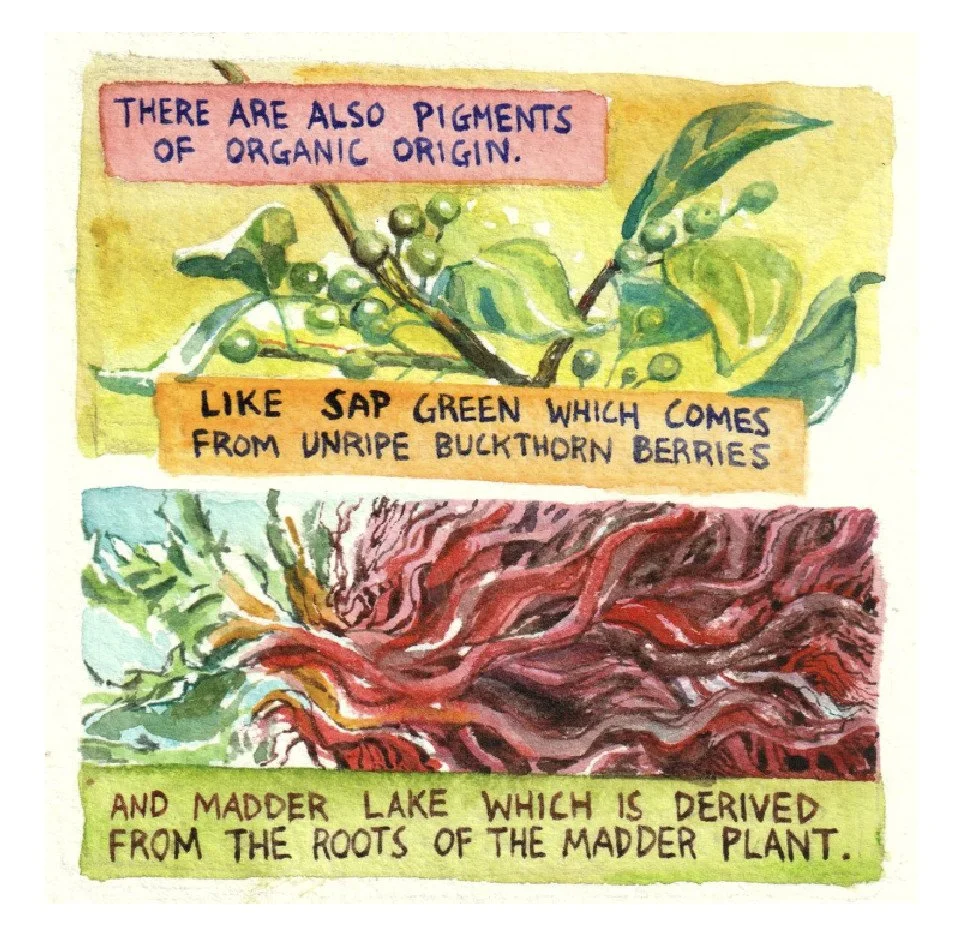
1. Earth (Dug from the ground)
Ochres
Charcoal
Umber
Sienna
2. Precious (Rare, expensive)
Lapis Lazuli
Malachite
Tyrian Purple
Vermilion
3. Alchemy (early synthetic)
Egyptian Blue
Lead White
Verdigris
Prussian Blue
4. Chemistry (modern, engineered)
Cadmiums
Cobalts
Phthalos
Quinacridones
Part 3: Pigment Stories
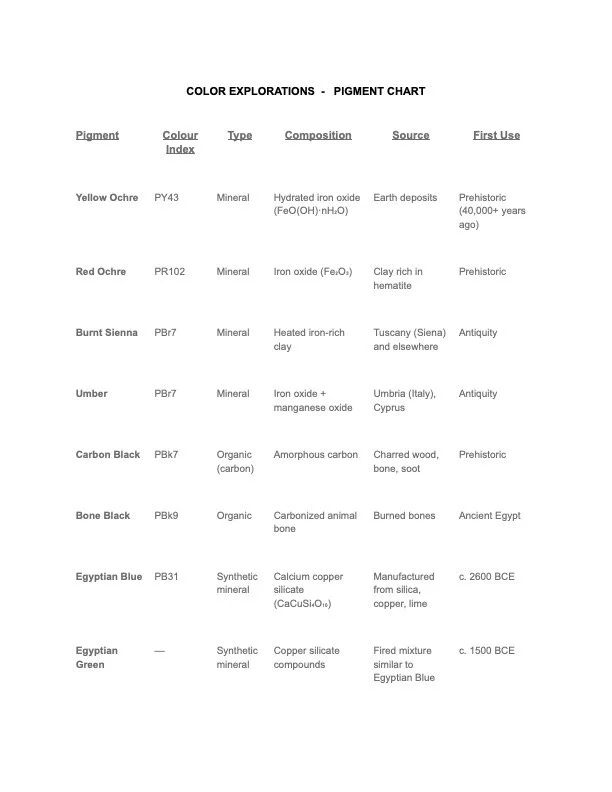
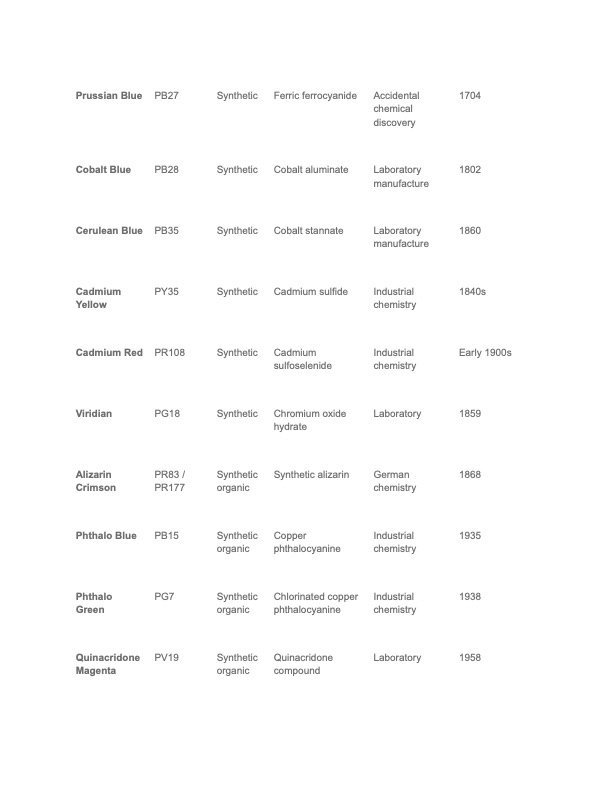
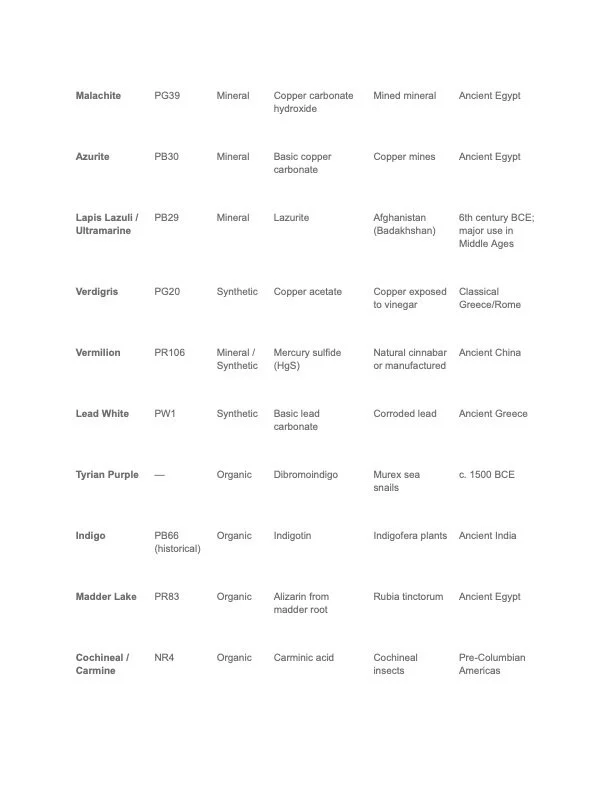
Part 4: Ancient Egypt
Color Symbolism in Ancient Egypt
Red (desher)- made from oxidized iron and red ocher, used to create flesh tones and symbolizing life but also evil and destruction.
Blue (irtiu and khesbedj) - "Egyptian Blue", made from copper and iron oxides with silica and calcium, symbolizing fertility, birth, rebirth and life and usually used to depict water and the heavens
Yellow (khenet and kenit) - made from ocher and oxides originally but, from the New Kingdom (c. 1570-1069 BCE) was mixed from arsenic trisulphide and symbolizing the sun and eternity
Green (wadj) - mixed from malachite, a copper mineral, and symbolizing goodness, growth, life, the afterlife, and resurrection.
White (hedj and shesep) - made from chalk mixed with gypsum, often employed as a lightener for other hues, and symbolizing purity, sacredness, cleanliness, and clarity.
Black (kem) - made from carbon, ground charcoal, animal bones, symbolized death, darkness, the underworld, as well as life, birth, and resurrection.
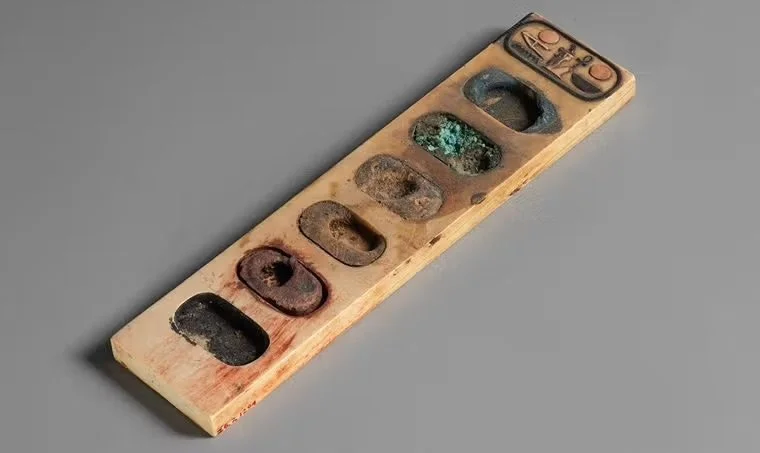
Palette Inscribed with the Name of Amenhotep III

A wall painting from the tomb of Horemheb (r. 1320-1292 BCE)
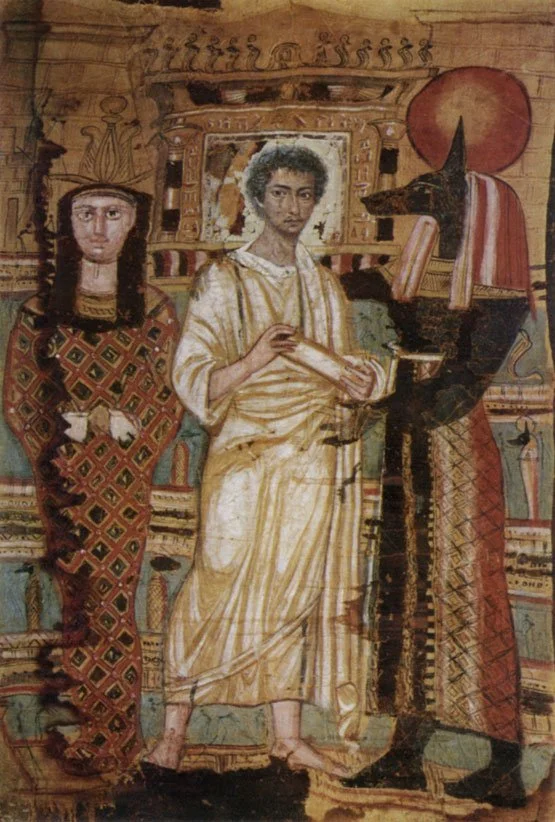
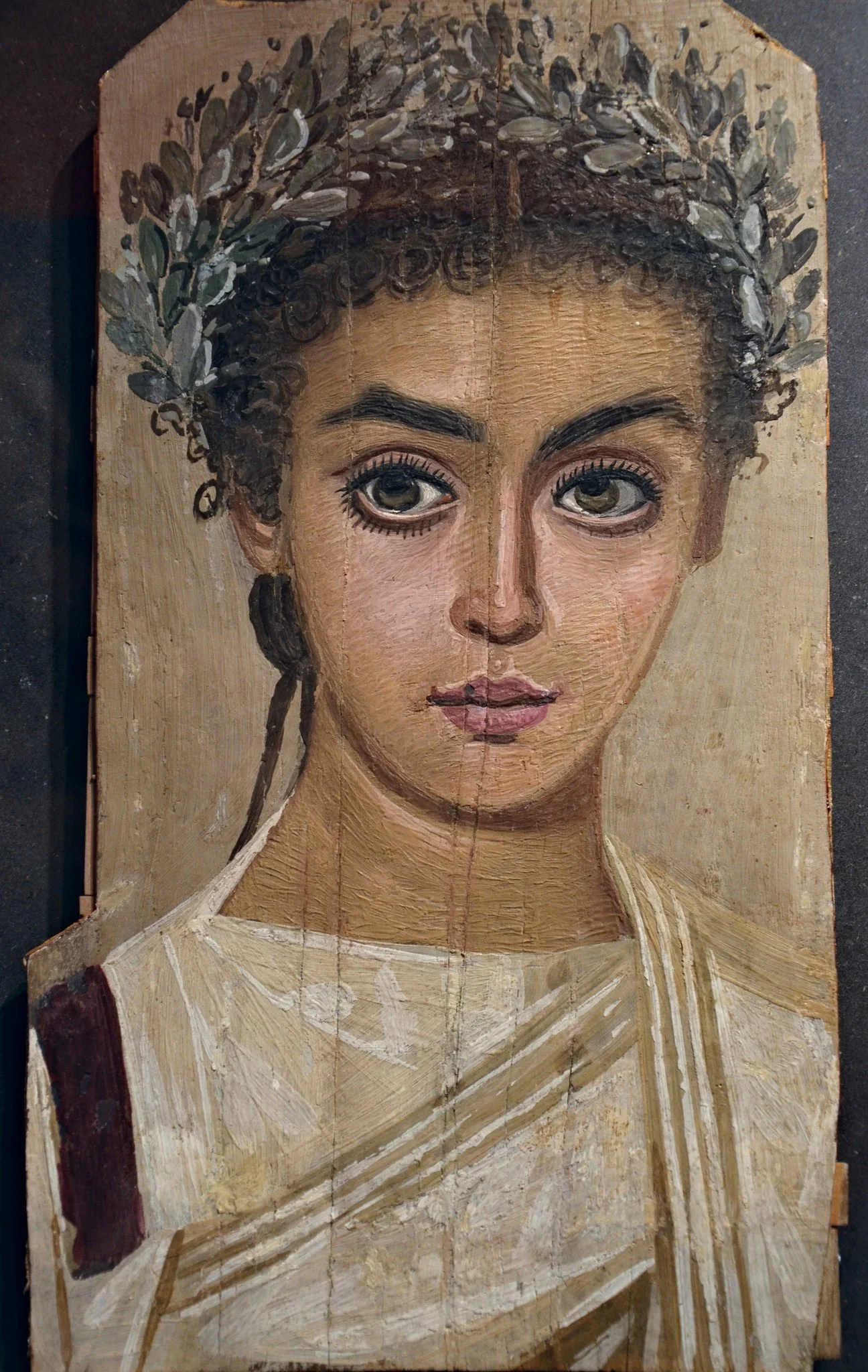
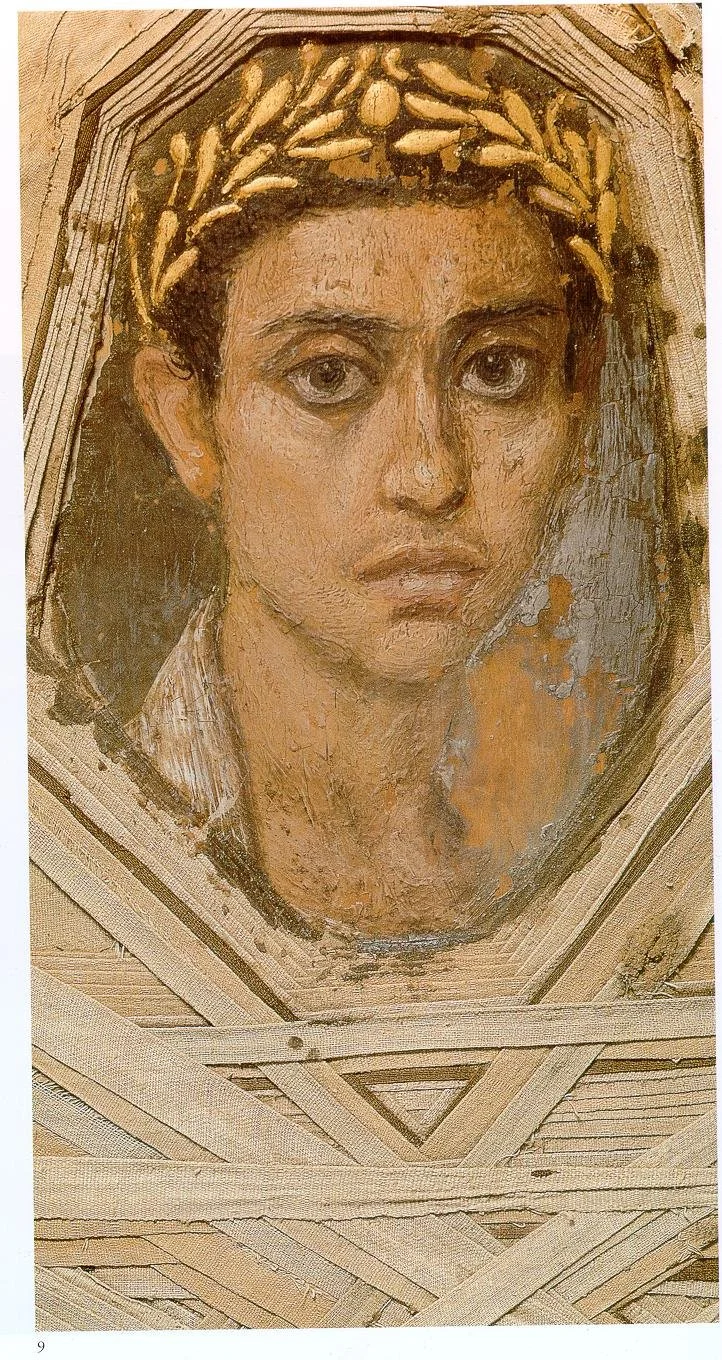
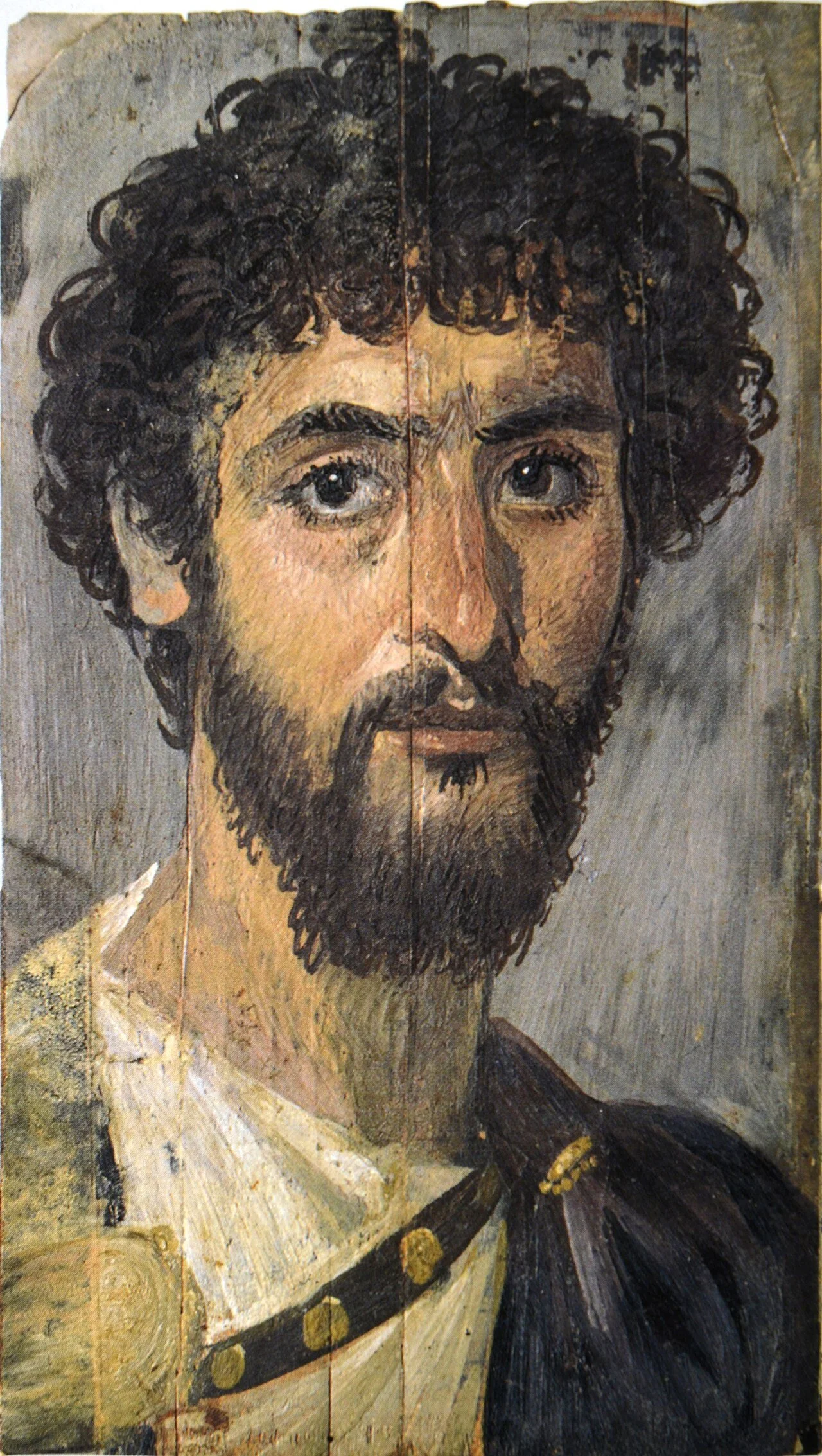
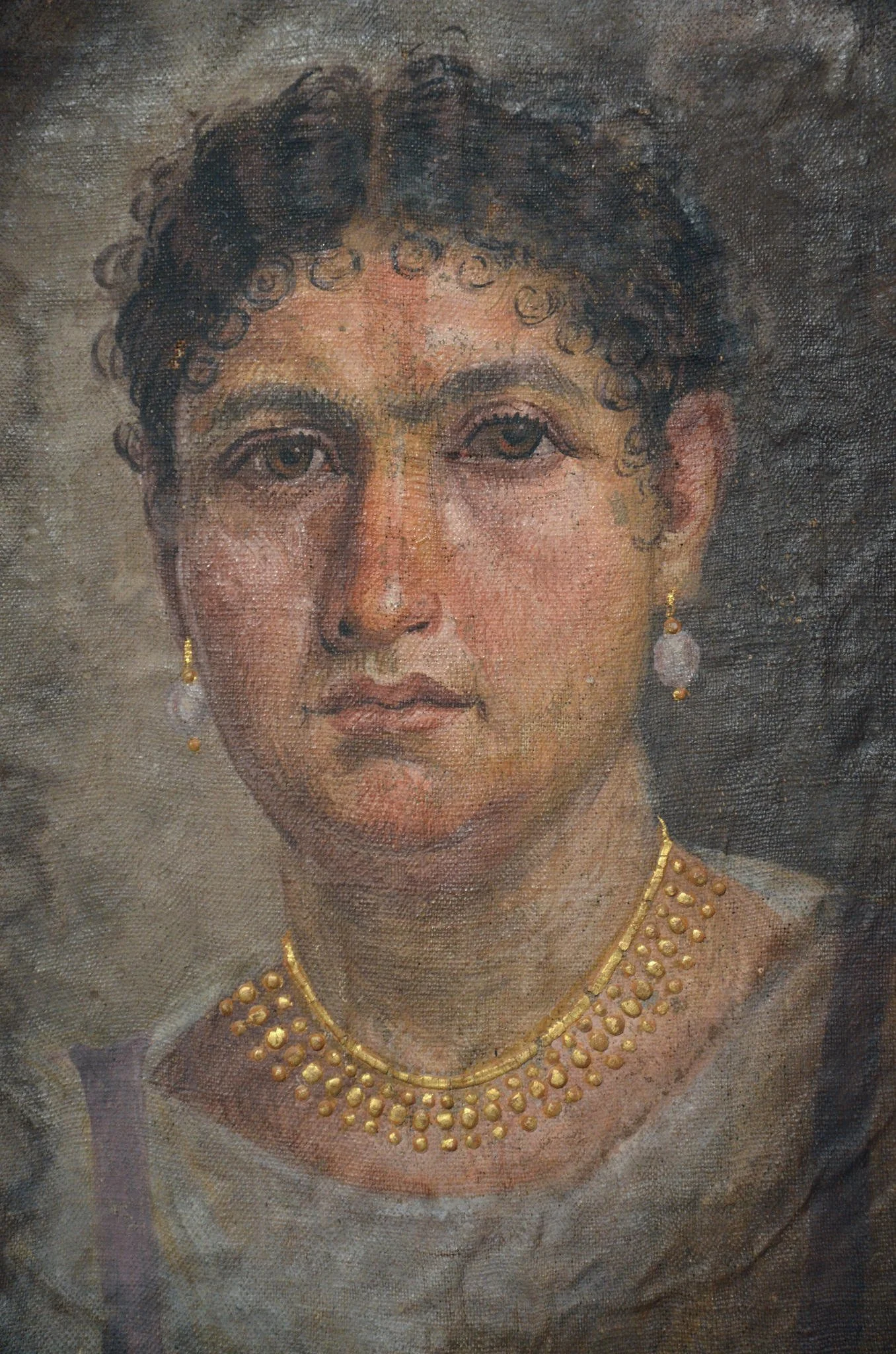
Fayum Portraits
Created in Roman Egypt between the 1st and 3rd centuries CE.
Painted on wooden panels and attached to Egyptian mummies.
Represent one of the earliest surviving traditions of realistic portrait painting.
Usually painted in encaustic (pigment mixed with hot beeswax) or tempera.
Part 5: Ancient Greece
Ἰδοὺ, πρὸς αἰθέρ᾽ ἐξάμιλλαι κόρας·
γραφτοὺς δ᾽ ἐν αετῶσι πρόσβλεψον τύπους.
"Look—raise your eyes toward the sky,
and gaze upon the painted figures in the pediment."
Euripides, Hypsipyle (5th century BCE)
Many centuries, beauty of ancient Greek art was tied to white, marble form
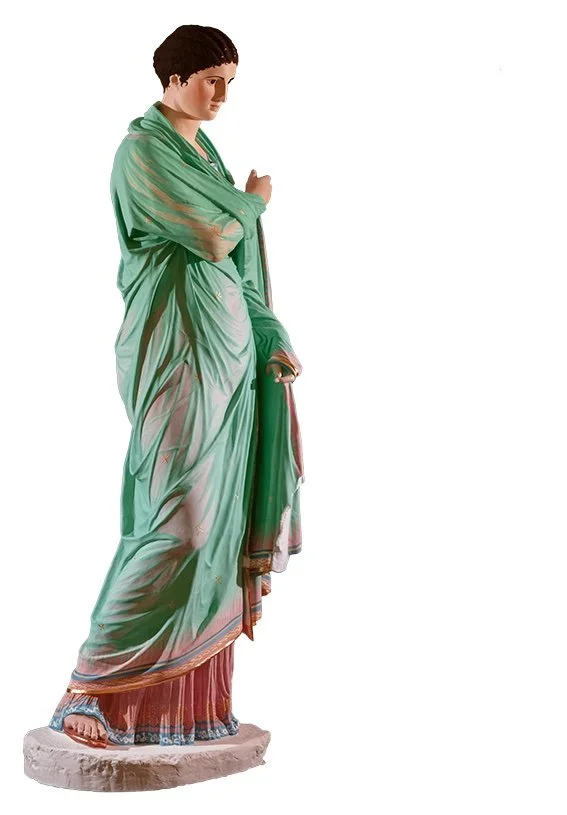
Recent discovery and anaylsis of color on sculptures, statues, and buildings, conveys vibrant, expressive, and realist applications of color
Color in ancient Greece was not only about beauty but also about cultural identity, social status, symbolism and human expression.
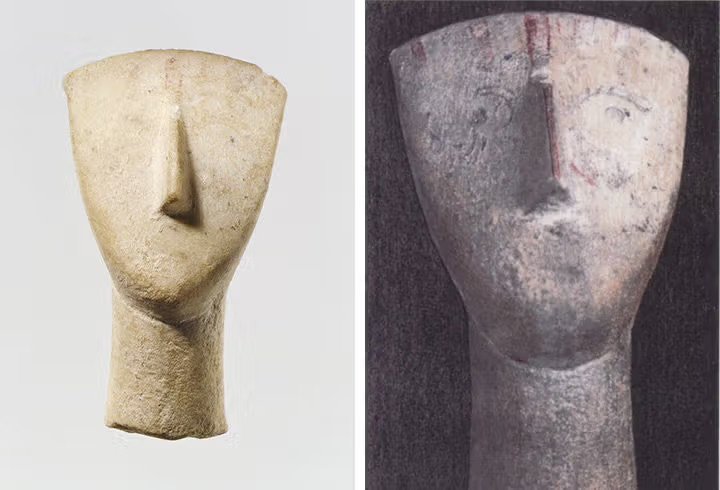
Cycladic Heads with Residual Color
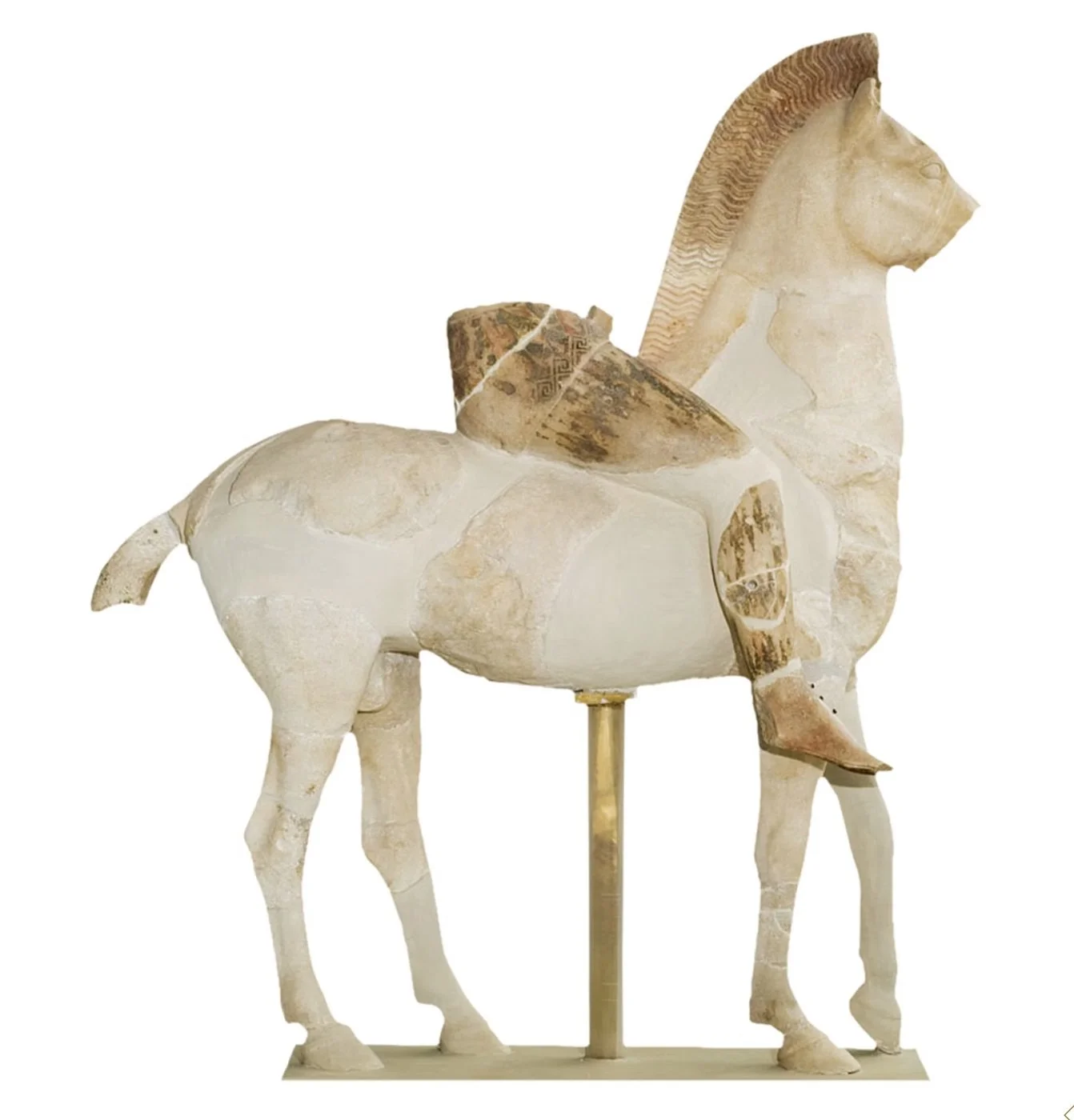
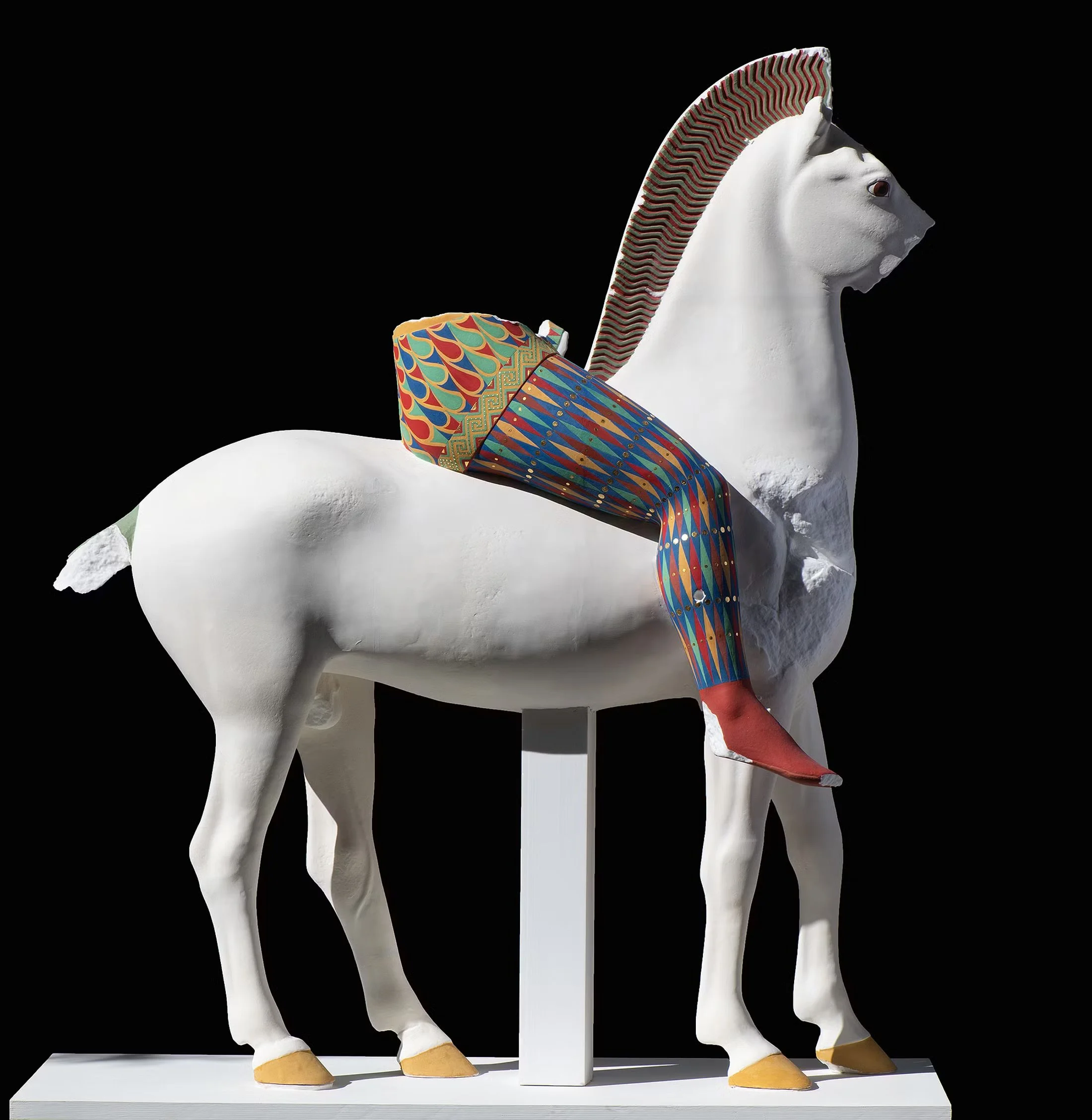
Original and Reconstruction with color of
Greek Statue, Persian rider
Reconstruction with color of
Greek Statue
Part 6: Rome
Rome: Color on an Imperial Scale
Built upon the pigments already used by Egypt and Greece.
Earth pigments remained the foundation of painting.
Roman trade expanded access to luxury pigments like vermilion, Egyptian blue, and malachite.
Fresco painting covered villas, temples, and public buildings with color.
Pompeii preserves one of the richest surviving examples of Roman painting.
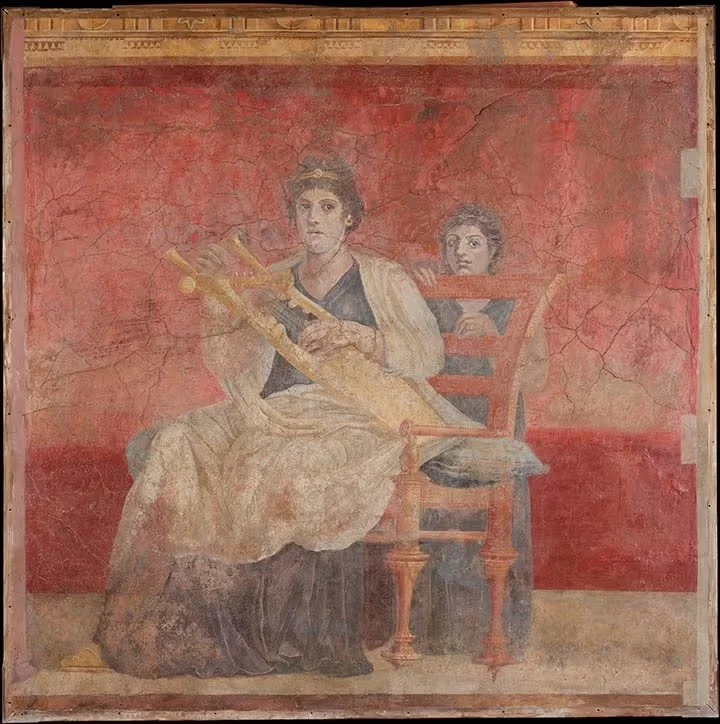
Fresco preserved from Pompeii
Exercise: Earth Palette study of a Fayum Portrait
Original

Line Drawing
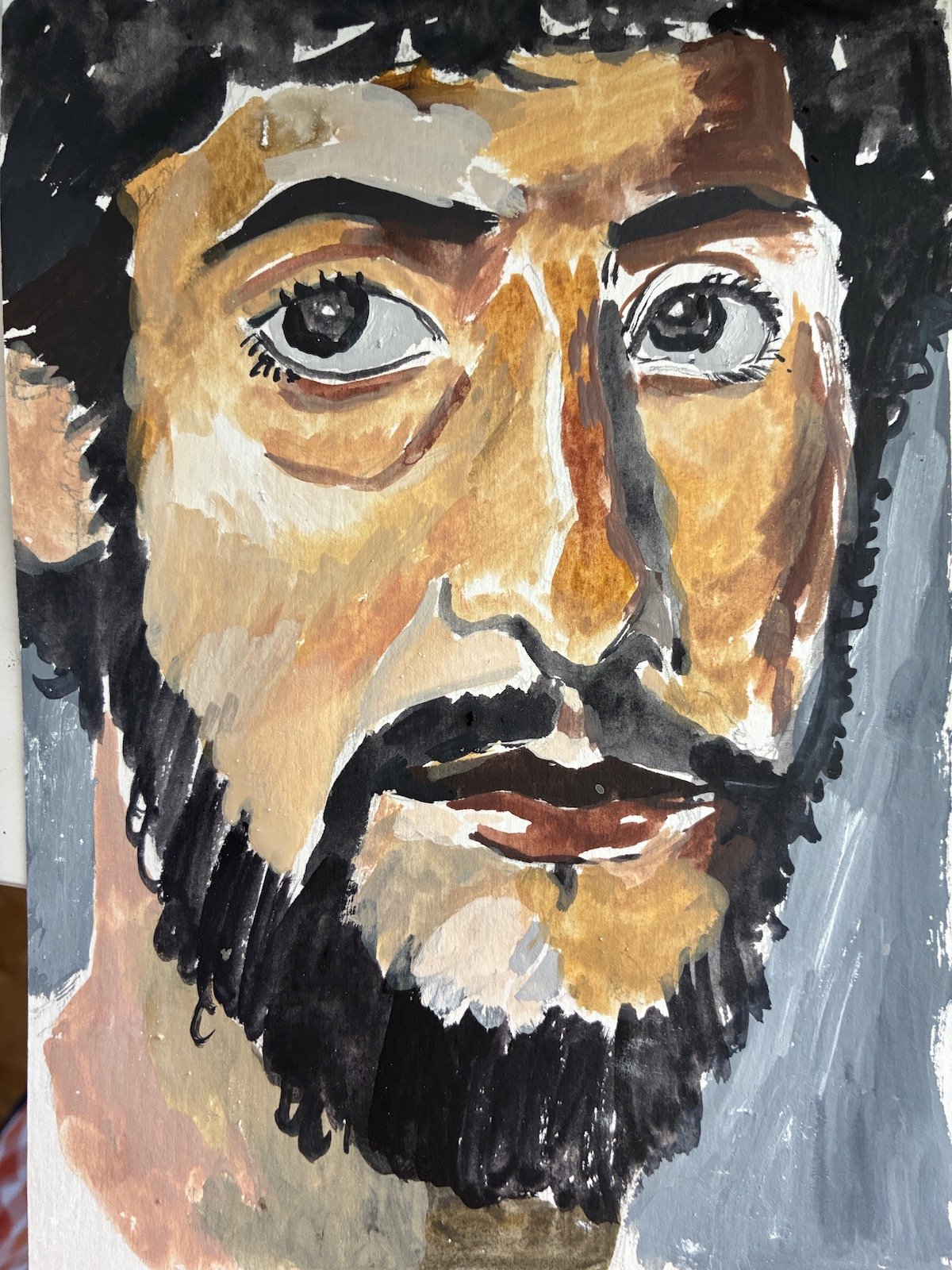
Painted copy using the tetrachromy earth palette (red ochre, yellow ochre, white and black)